

Insights
Light Gauge Steel Framing: The Smarter Way to Build in Kenya

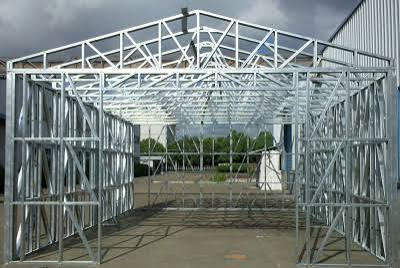
Kenya’s construction industry is changing fast. Rising timber costs, longer building timelines, and growing demand for durable, termite-proof structures are pushing developers, contractors, and homeowners toward alternatives to traditional timber and heavy steel framing. One of the most promising options gaining ground is Light Gauge Steel Framing — a lightweight, precision-engineered building system that’s faster to install, more sustainable, and built to last.
At Afritec Steel Fabricators, we’ve seen firsthand how light gauge steel framing is reshaping residential and commercial construction across the region. Here’s everything you need to know about light gauge steel frames
What Is Light Gauge Steel Framing?
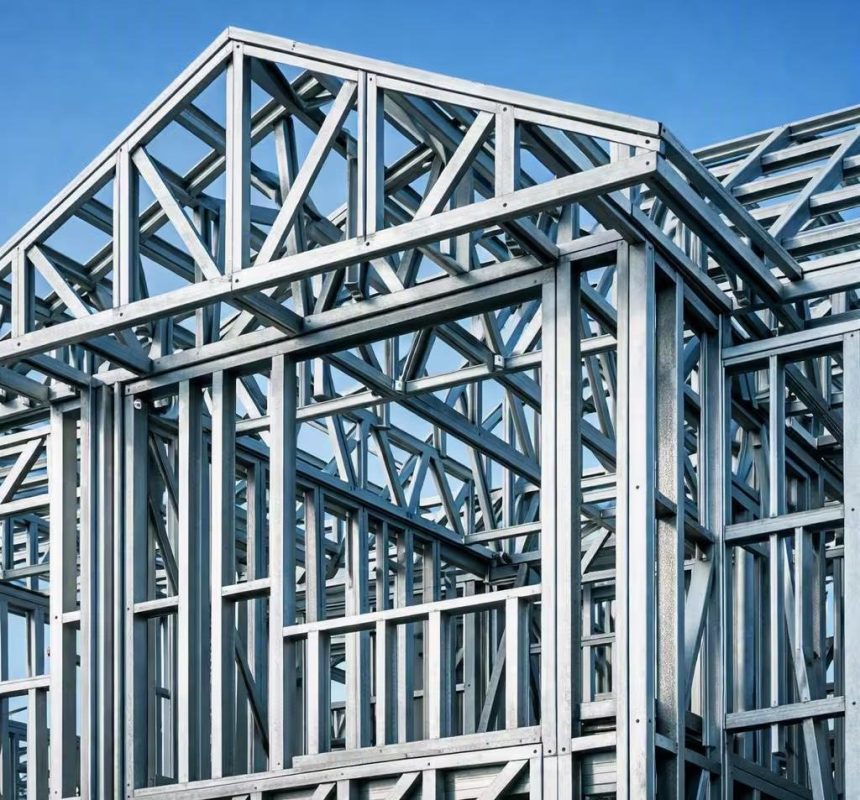
Light gauge steel (LGS) framing uses galvanized steel sections — typically between 0.5mm and 3mm thick — that are cold-formed into C-shaped studs, tracks, and joists. Unlike structural steel beams used in heavy construction, LGS components are thin, lightweight, and designed specifically for framing walls, floors, and roofs, much like timber studs but with far greater strength-to-weight performance.
The steel is roll-formed at room temperature (hence “cold-formed”) rather than heated, which keeps production costs down while maintaining consistent strength and dimensional accuracy. Every stud and track comes out identical — no warping, no natural defects, no guesswork on site.
Main Advantages of Light Gauge Steel Frames
1. Speed of construction
LGS components arrive pre-cut and ready to assemble, often bolted or screwed together rather than welded on-site. This dramatically cuts build time compared to conventional block or timber construction — a real advantage for developers working against tight project deadlines.
2. Termite and rot resistance
Kenya’s climate is unforgiving on timber. Termites, moisture, and humidity cause structural damage that costs property owners heavily in repairs over time. Steel simply doesn’t have this problem, making LGS framing a long-term, low-maintenance investment.
3. Lightweight yet strong
Despite being significantly lighter than timber or masonry, light gauge steel offers excellent load-bearing capacity. This reduces the overall weight on foundations, which can lower foundation costs — particularly valuable on sites with weaker soil conditions.
4. Dimensional accuracy and less waste
Because components are factory-manufactured to precise specifications, there’s minimal on-site cutting, less material waste, and fewer costly on-site errors. This also means cleaner, more predictable construction sites.
5. Fire resistance
Steel doesn’t burn, warp under heat the way timber does, or contribute fuel to a fire. For commercial buildings and multi-unit residential developments, this is an important safety and insurance consideration.
6. Sustainability
Steel is fully recyclable, and LGS framing typically uses recycled steel content. For developers pursuing green building certifications, this is a meaningful advantage over timber sourced from diminishing forest resources.
Common Applications
Light gauge steel framing is versatile enough to serve a wide range of projects:
- Residential housing — affordable homes such as prefabricated houses , especially where speed and cost-efficiency matter.
- Commercial buildings — partition walls, ceiling systems, and mezzanine floors. They are also used construction of prefabricated offices
- Roof trusses — a lightweight, termite-proof alternative to timber trusses
- Mixed-use and multi-storey developments — combined with concrete or structural steel frames for hybrid construction
- Renovation and extensions — minimal disruption to existing structures due to lightweight components
- Institutional developments: Mainly in construction of prefabricated classrooms
Comparison of Light Gauge Steel vs. Timber Framing
| Factor | Light Gauge Steel | Timber |
| Termite resistance | Excellent | Poor (requires treatment) |
| Fire resistance | High | Low |
| Dimensional consistency | Precise, factory-made | Varies with material quality |
| Installation speed | Fast, pre-fabricated | Moderate |
| Long-term maintenance | Low | Higher (rot, pests, warping) |
| Recyclability | Fully recyclable | Limited |
While timber remains cheaper upfront in some cases, the lifecycle cost of LGS framing — factoring in durability, reduced maintenance, and faster build times — often makes it the more economical choice over the life of a building.
What to Consider Before Choosing LGS Framing
Light gauge steel framing isn’t a one-size-fits-all solution. A few factors are worth discussing with your fabricator before committing:
- Design complexity — LGS works best with structural designs planned around its modular system from the outset
- Skilled installation — while faster than traditional methods, LGS still requires trained installers familiar with steel framing techniques
- Insulation and finishing — steel conducts heat and cold differently from timber, so proper insulation detailing matters for thermal comfort
- Corrosion protection — always confirm the galvanization grade (commonly G90 or Z275) to ensure adequate protection against Kenya’s coastal humidity or inland conditions
Why Work With Afritec Steel
Sourcing light gauge steel framing locally — rather than importing pre-fabricated systems — offers real advantages: faster turnaround, easier customization to your specific project, and support from a team that understands local building codes and site conditions.
At Afritec Steel Fabricators, we design and fabricate light gauge steel components tailored to your project specifications, whether you’re building a single residential unit or a full commercial development. Our team works closely with architects and contractors from the design stage through to installation, ensuring every component fits precisely and performs as engineered.
Final Thoughts
As Kenya’s construction sector continues to modernize, light gauge steel framing stands out as a practical answer to some of the industry’s biggest challenges: slow build times, rising material costs, and the ongoing battle against termites and structural decay. For developers and homeowners looking to build smarter, faster, and more durably, it’s an option well worth exploring.
Ready to discuss your next project? Get in touch with our sales team for a consultation on how light gauge steel framing can work for your build.


