

Insights
Pressed Steel Tank

A guide to Pressed Steel Tanks: Design, Benefits, and Applications
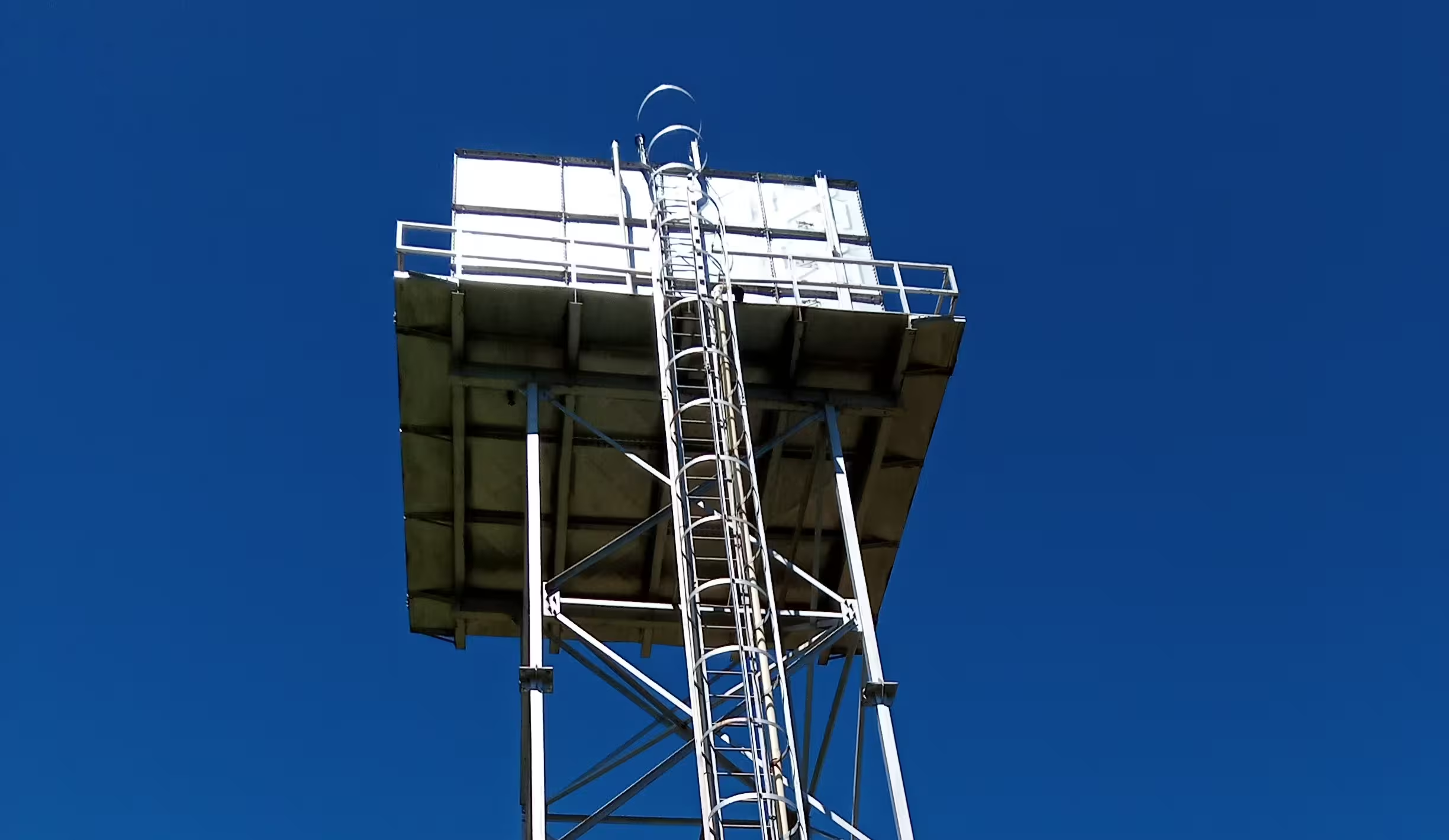
A Pressed Steel Tank is a special storage tank made from steel plates that mechanically pressed into shape and then bolted or welded together to form a rigid storage container. Pressed Steel Tanks can either be made from hydraulically pressed mild steel or hot dip galvanized steel panels. Due to how they are made, pressed steel panel tanks are durable with lifespans of more than 30 years. This is contrary to plastic storage tanks which have a relatively short life span. Pressed Steel Tanks can be elevated high on the ground or raised slightly above ground to allow any liquid to flow by gravity. We are proud to introduce Afritec Steel Fabricators, a reliable pressed steel tank fabricator in Kenya with years of technical and sales expertise.
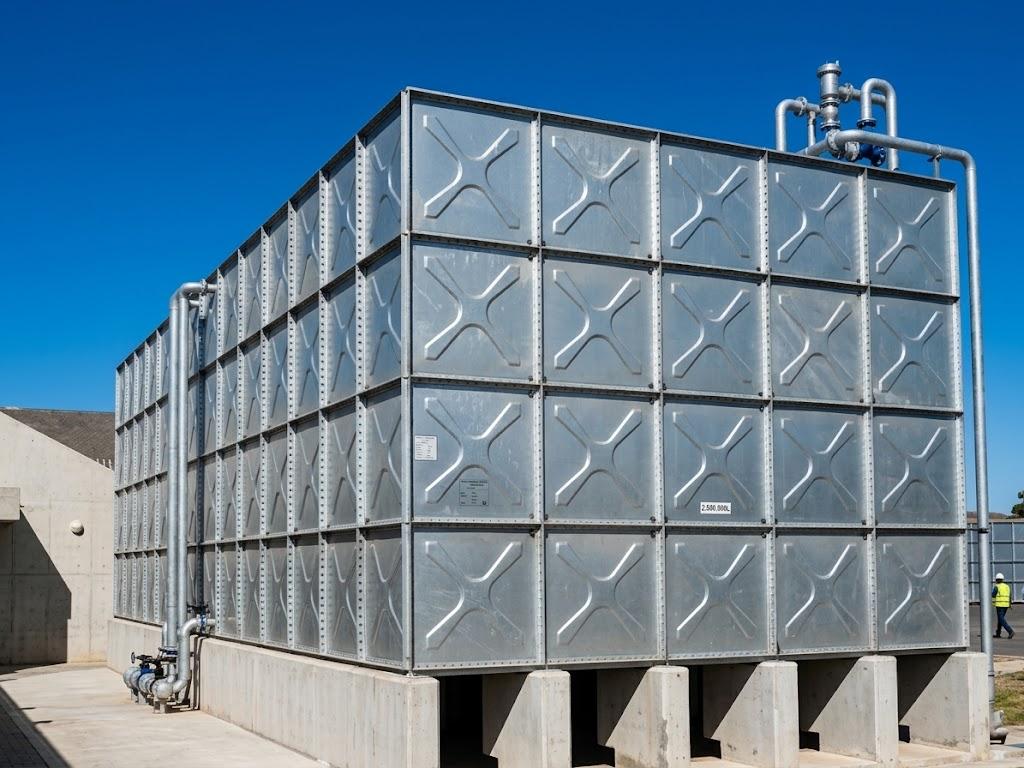
Advantages of Pressed Steel Tanks.
- Modular & Site-Assembly Friendly: Pressed sectional tanks are shipped flat-packed in standard panel sizes ,making them easy to transport over long distances and remote areas. The panels can easily be hoisted into constrained spaces like rooftops and basements where plastic and pre-fabricated tanks cannot fit.
- Flexible Storage Sizing: Storage capacities of pressed tanks can be customized directly to site specifications and expanded, reconfigured, or relocated with relative ease as water storage requirements grow.
- Good Structural Strength: Due to the fact that they are formed via hydraulic pressing, the profiled panel design enhances structural rigidity, enabling the tank to withstand extreme hydrostatic pressure without warping or leaking. This custom fabrication thus makes pressed panel tanks last for many years.
- Long Lifespan & Corrosion Resistance: At Afritec Steel Fabricators, we use hot-dip galvanized (HDG) to the required standards. Our panels are then coated with heavy-duty protective primers and bituminous paints, making the panels resist rust and UV degradation, delivering a service life of more than 30 years.
- Safe and Portable Water Storage: We fit our sectional panels with food-grade synthetic rubber seals and optional non-toxic internal epoxy linings, preventing algae growth, water contamination, and light penetration. This makes the water stored water safe for the communities.
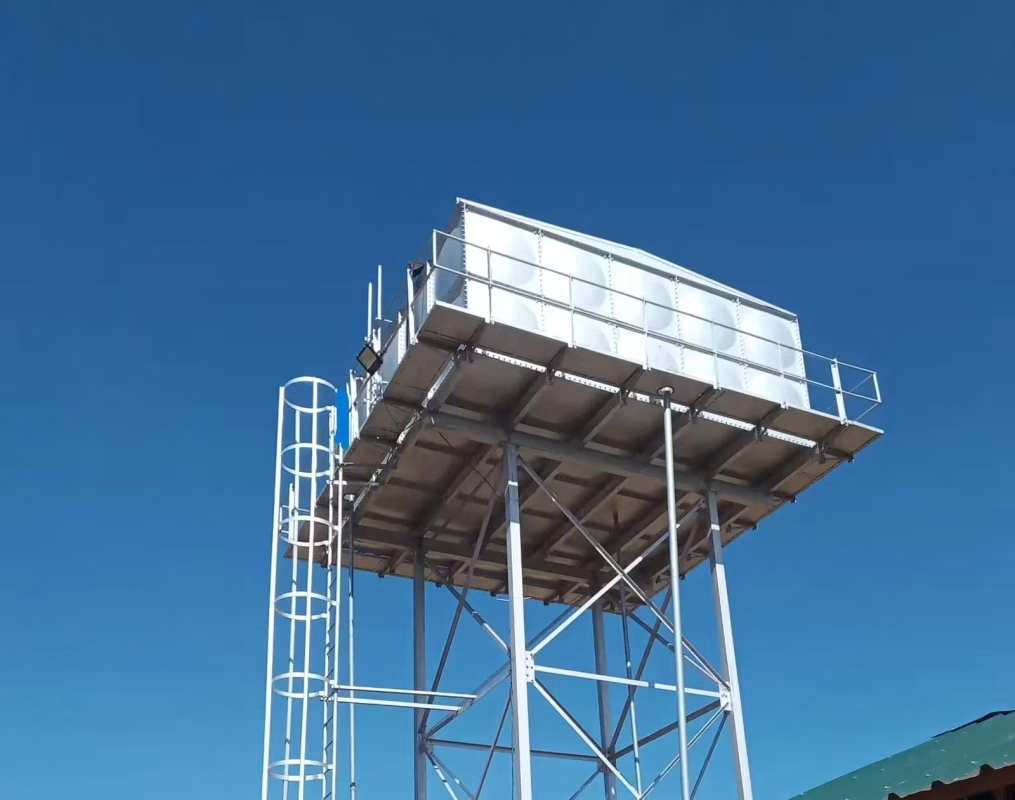
- Flexible Mounting Options: Pressed Tanks are suitable for ground-level installation, underground placement, or elevated installation on structural steel towers for gravity-fed distribution.
Components of Pressed Steel Tanks
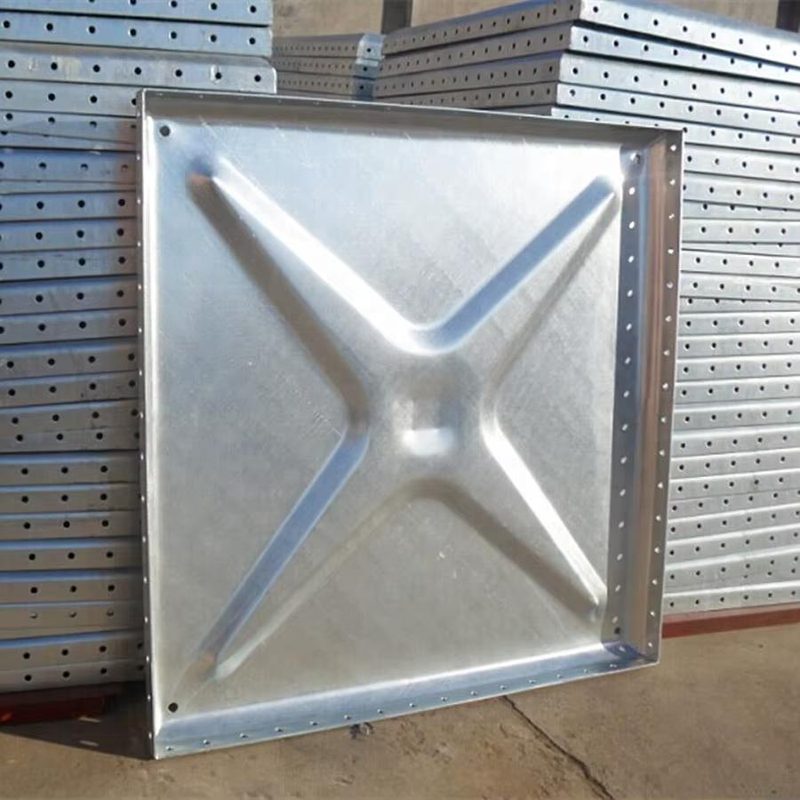
Pressed Steel Sectional Panels
This includes the base, side, and cover plates made in standard sizes. Typical sizes include 1m × 1m or 1.22m × 1.22m with flanged edges. The profile is usually hydraulically pressed which adds structural rigidity to thin steel plates. (in most cases a raised dome or diamond pattern)
Internal Structural Reinforcements
Tie Rods and Stays
High-tensile steel rods anchored internally across opposite panels to counteract outward hydrostatic pressure when filled with water.
Cleats & Angle Supports
Internal Roof Columns
This includes Vertical steel pipes or channel supports that hold up the roof panels on larger tanks.
Jointing & Fastening Systems
Sealing Gaskets:
W use synthetic non-toxic rubber or foam strips placed between panel flanges to create a leak-proof seal. This ensures zero water leakages.
High-Tensile Bolts & Nuts
We use heavy-duty galvanized or stainless steel fasteners used every few inches along panel flanges to clamp panels together.
Steel brackets and struts welded or bolted at corner joints and internal seams to distribute loads evenly.
External Support & Base Infrastructure
Dunnage Beams / Steel C-Channels
Parallel steel beams positioned beneath the tank base to distribute the total load evenly over a concrete foundation or steel tower frame.
External Bracing
Angle iron or structural stays attached externally on taller tanks to maintain panel alignment without requiring excessive internal tie rods.
Access Ladders
Internal aluminum/galvanized ladders for cleaning and maintenance, plus external ladders for roof access.
Manhole & Hatch Cover
Lockable inspection access point located on the roof panel.
Ventilation Screen.
Insect- and bird-proof air vents are installed on the roof cover to prevent vacuum buildup or over-pressurization during filling and discharge.
Pipe Nozzles & Flanges
Factory-cut inlet, outlet, overflow, and drain connection points are fitted with steel flanges or threaded couplings.
Water Level Indicator
To monitor water levels, an external mechanical cat-head or clear tube system is installed. Water level is supposed to be detected visually.
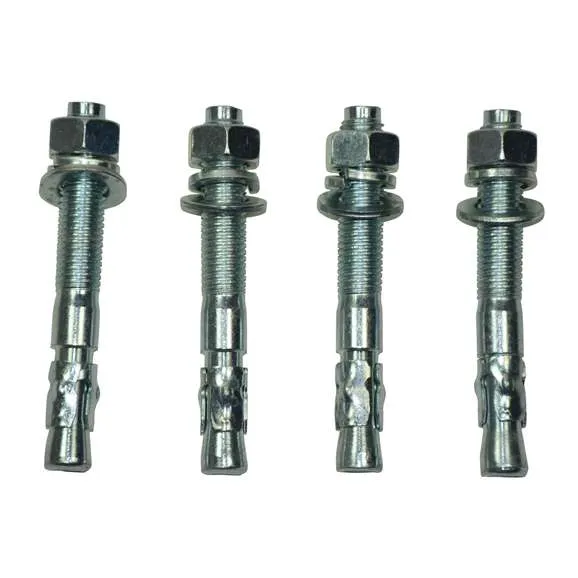
Anchor Bolts
Anchor bolts are heavy-duty structural fasteners designed to attach structural steel elements, equipment, base plates, and elevated tower legs securely to concrete foundations. They transfer tension, shear, and uplift forces directly into the concrete substructure.
Design and Specifications of Pressed Steel Tanks.
The design and specifications of pressed steel tanks (sectional rectangular tanks) are strictly guided by international standards—most notably BS 1564:1975 (Specification for Pressed Steel Sectional Rectangular Tanks)—to ensure they safely withstand hydrostatic pressures, wind loads, and dynamic fluid forces.
Standard Panel Dimensions & Geometries
- Module Sizes: Standard panels are manufactured in 1.22m x 1.2m ( 4ft x 4ft) modules, with 1.0 m x 1.0 m or 1.0 m x 0.5 m panels used for custom footprint constraints.
- Panel Pressing Pattern: Plates are hydraulically pressed with a raised dome or diamond section to dramatically increase stiffening and bending resistance under hydraulic pressure without adding unnecessary weight.
- Flange Configuration: Panel edges feature continuous 45 degrees /90degrees combined double flanges or standard 90 degrees single flanges pre-drilled with uniform bolt holes at a pitch not exceeding 76.2mm
Plate Thickness Standards (British Standards BS 1564)
The thickness of the steel plate depends on its position relative to hydrostatic pressure depth. Liquid pressure increases proportionally with depth (pressure increases with increase in height). This means thicker bottom tiers are required for taller tanks. Below is a guide line.
| Tank Height (Tiers) | Overall Height | Bottom & Tier 1 Thickness | Upper Tiers Thickness |
| 1 Tier | 1.22m | 5.0mm | 5.0mm |
| 2 Tiers | 2.44m | 5.0mm | 5.0mm |
| 3 Tiers | 3.66m | 5.0mm | 5.0mm |
| 4 Tiers (Max Rec.) | 4.88m | 6.0mm | 5.0mm (Tiers 2, 3, & Top) |
Note: For specialized storage or hot liquids, a minimum plate thickness of 6mm across all panels is standard practice. However, this can be agreed upon by your site engineer.
Material Grade & Corrosion Protection
- Steel Grade: Structural steel typically conforms to BS EN 10025 S275JR or BS 4360 Grade 43A.
- Galvanization: Panels and structural elements undergo Hot-Dip Galvanizing (HDG) to ISO 1461 / BS EN ISO 1461, applying a minimum zinc coating weight of 610gms per m square for long-term weather and water resistance.
- Specialized Linings: For aggressive liquids or strict potable water standards, panels are lined internally with food-grade epoxy coatings or bitumen coatings.
Foundation Support & Load Transmission
- Dunnage Beams (Steel I-Beams / C-Channels): Installed continuously underneath each bottom panel flange line (typically at 1.22m center-to-center spacing).
- Deflection Limits: Support structures are designed with a maximum allowable deflection ratio of 1/500 of the span to prevent joint movement and seal failure.
- Base Clearance: A minimum clearance of 500mm to 600mm beneath external bottom flange tanks is provided for installer access during bolt tightening and inspection.
Standard Fittings Specification
- Fasteners: Minimum M14 (Grade 8.8) hot-dip galvanized or stainless steel bolts, nuts, and washers.
- Joint Sealants: Non-toxic, UV-stable EPDM, PE foam sealant tape, or synthetic food-grade rubber gaskets.
- Cover Panels: Pitch-roofed or flat steel panels designed to support live maintenance loads (0.75 kN/m2).
- Air Vent: Insect-mesh screened air vent for pressure equalization.
- Access Points: 600mm x 600mm lockable roof manhole hatch paired with internal and external aluminum/HDG ladders.
Applications of Pressed Steel Tanks.
1. Municipal & Public Water Supply
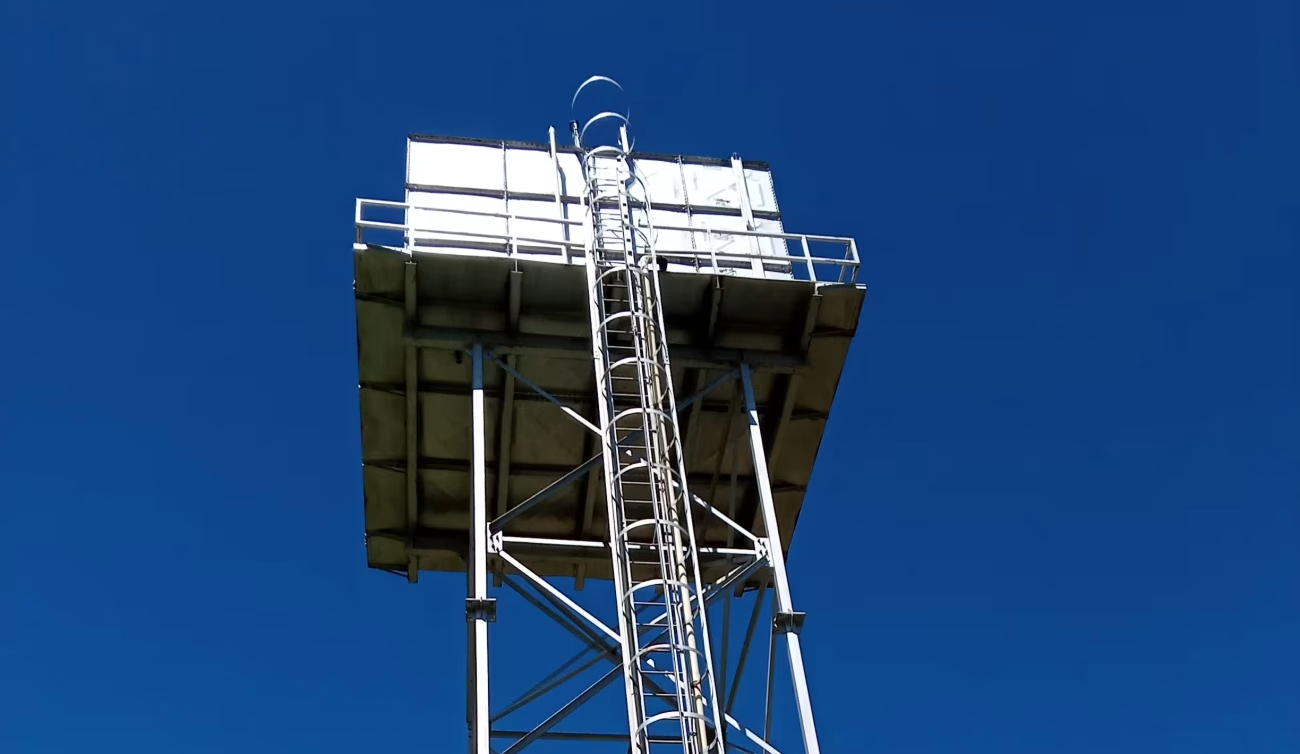
- Elevated Gravity Feed: elevated structural steel towers to provide consistent hydraulic pressure across residential estates, townships, and rural water schemes.
- Ground-Level Bulk Storage: Serves as buffer storage at water treatment facilities and municipal distribution stations.
2. Commercial & Institutional Facilities
- Healthcare & Hospitals: High-capacity potable water reserves to ensure uninterrupted supply during municipal grid outages. Pressed Tanks are therefore offer one of the best water storage solutions for hospitals.
- Educational & Government Institutions: Overhead or ground storage for universities, boarding schools, and public complexes.
- Commercial Real Estate: Overhead roof tanks or basement buffer storage in multi-story office buildings, shopping centers, and hotels.
3. Industrial & Manufacturing Operations
- Process Water Storage: Holds cooling water, boiler feed, and process water for textile mills, beverage factories, chemical plants, and heavy manufacturing.
- Effluent & Chemical Storage: Fitted with specialized chemical-resistant liners (epoxy or bitumen) to temporarily hold industrial wastewater or non-corrosive industrial liquids.
4. Fire Protection & Safety Systems
- Dedicated Fire Reserves: Meets stringent municipal fire codes by holding dedicated, high-volume water reserves connected to automatic sprinkler systems and hydrants.
5. Agricultural & Mining Projects
- Irrigation Water Storage: Pressed Sectional Tanks hold bulk water pumped from boreholes or rivers for large-scale crop irrigation and livestock farming.
- Remote Mining Camps: Modular panels can be transported over rough terrain and flat-packed for easy setup at remote mining, oil, and gas sites.
6. Rainwater Harvesting and Storage
- Large-Scale Harvesting: Pressed Panel Tanks are Installed at industrial warehouses, schools, and commercial farms to collect and store roof runoff for non-potable reuse
Common Steel Tank Sizes & Dimensions in Kenya
Due to the fact that pressed steel tanks are sectional, Afritec Steel Fabricators can build almost any capacity by combining panels. However below are the common sizes that we fabricate for our various clientele.
| Tank Capacity in Litres | Dimensions (Length × Width × Height) | Applications |
| 5,000 to 10,000 Litres | 2m x 2m x 1.5m | Residential homes, small schools, or remote site offices |
| 50,000 Litres | 4m x 3m x 4m or 4m x 4m x 3m | Large commercial properties, apartment blocks, and small agricultural projects |
| 100,000 Litres | 5m x 5m x 4m and 6m x 4m x 4m | Factories, hospitals, and large housing estates |
| 250,000 Litres | 8m x 6m x 5m | Institutional setups, large manufacturing plants, and gated communities |
Key Considerations for Size Selection
- Tier Limit: For standard pressed steel tanks, 4 tiers (maximum height) is the industry structural limit before specialized external structural reinforcement or heavier plate gauges are required.
- Elevated Tower Load: Taller/larger tanks require significantly heavier structural steel tower frames and concrete pedestals to manage dynamic wind shear and weight load.
Cost of Constructing Pressed Steel Tank in Kenya?
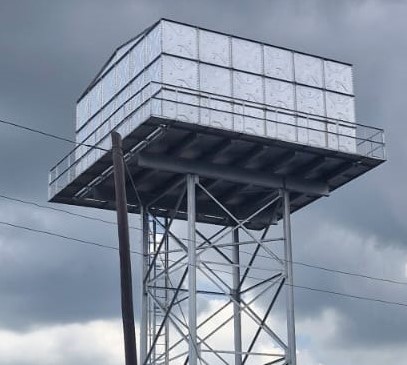
Generally, the cost of pressed tank in Kenya will depend on the height and the volume of water, but the cost typically start from Kes. 150,000
Prices of pressed steel tank in Kenya.
| Capacity | Tank Height | Price (Kes.)>> From |
| 50m3 | 9m | 500,000 |
| 100m3 | 9m | 1,500,000 |
| 500m3 | 9m | 3,500,000 |
| 1,000m3 | 9m | 6,00,000 |
Afritec Steel Fabricators, for example, specializes in pressed steel tanks and tank towers, offering solutions tailored to Kenya’s infrastructure needs. Our panel steel tanks are designed to be safe, durable, and adaptable, making them ideal for both urban and rural projects.


Best pressed steel tank fabricator in Kenya