

Insights
Steel Water Tanks in Kenya: Types, Benefits, Sizing and Buying Guide

What Is a Steel Water Tank?
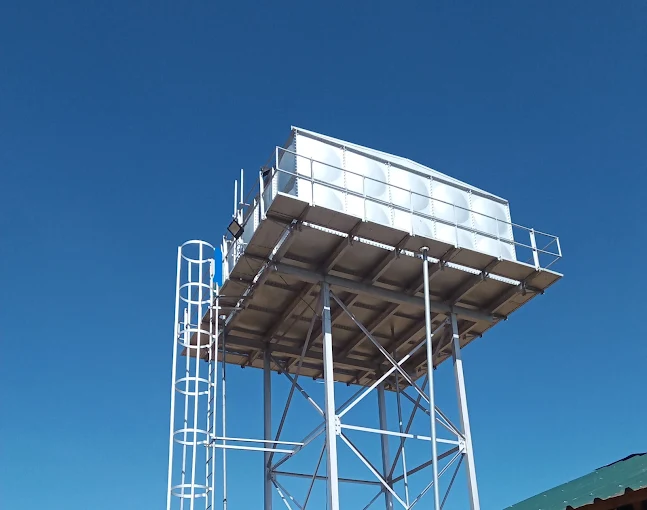
A steel water tank is a water storage structure fabricated from structural steel plate or sheet, joined by welding or bolting, and finished with a protective system that keeps the water clean and the metal free from corrosion. Steel Water tanks can be installed at ground level, on an elevated steel stand, or partly buried, and they are used for domestic supply, irrigation, industrial processes, livestock, construction sites and firefighting reserves. Steel tanks are one of the most durable storage options available. They resist impact, fire and UV damage, hold their shape under heavy loads, and can be fabricated to almost any capacity or footprint. This guide explains how steel tanks work, which type suits which job, how they compare with plastic tanks, how to size one, and how to keep it in good condition for decades.
Unlike plastic tanks, steel tanks can be custom fabricated. Capacity, diameter, height, inlet and outlet positions, access hatches, level indicators and stand height can all be designed around your site and your water system. Afritec Steel Fabricators is your reliable and trusted steel tank fabricator in Kenya.
Types of Steel Water Tanks
1. Galvanized Pressed Steel Tanks
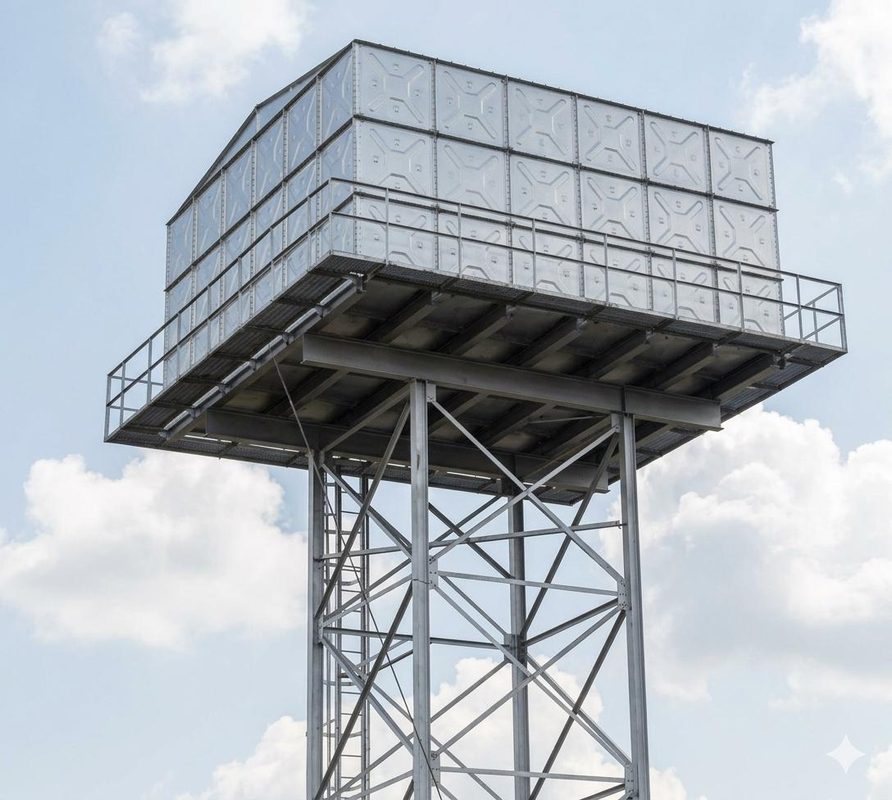
Galvanized pressed steel tanks are made from steel coated with zinc. The zinc acts as a sacrificial barrier, corroding before the steel does. They are a popular choice for rainwater harvesting, irrigation and general-purpose storage because they balance strength and cost well. Bolted galvanized panel tanks are also easy to transport to remote sites and assemble on location.
2. Corrugated Steel Water Tanks
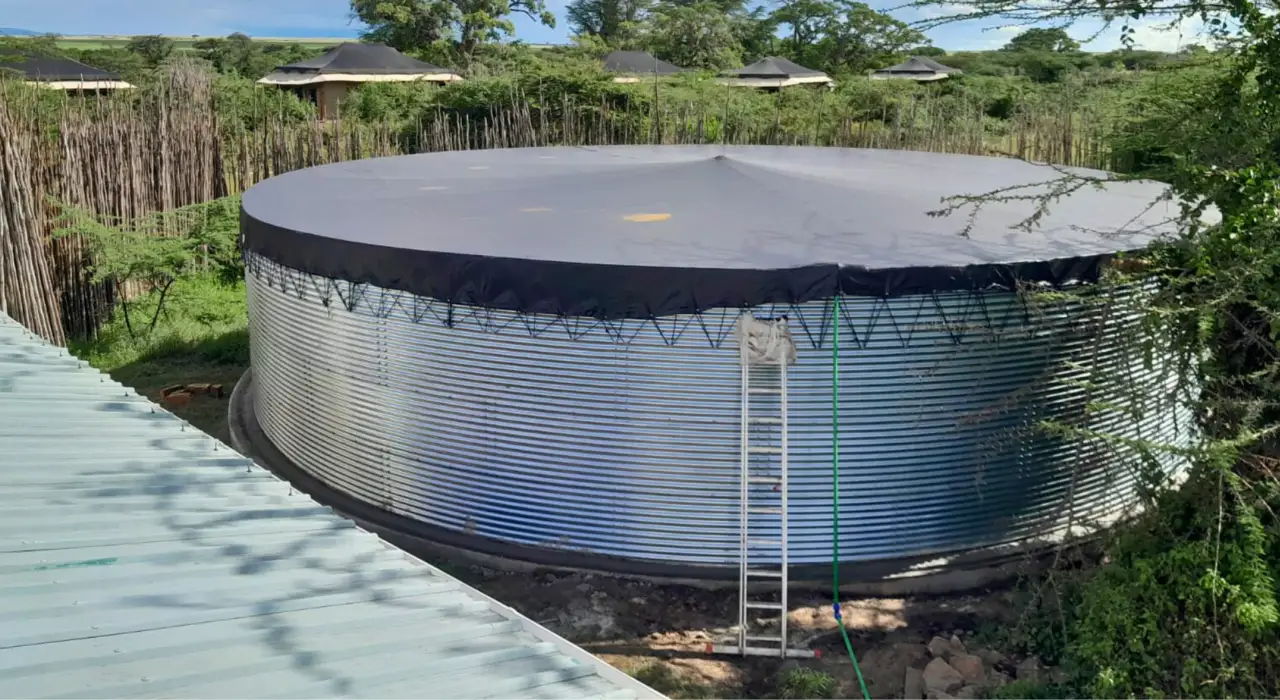
Featuring ribbed, roll-formed steel walls designed to maximize structural strength against outward hydrostatic pressure, corrugated steel tanks provide an economical yet highly durable solution for large-volume storage. Often lined with heavy-duty geomembrane or food-grade liners, they are widely deployed in commercial agriculture, rainwater harvesting, and industrial process water buffering
3. Stainless Steel Tanks
Stainless steel, typically grades 304 or 316, contains chromium, which forms a self-healing oxide layer that resists rust. These tanks suit drinking water, food and beverage processing, dairies, hospitals and pharmaceutical use, where hygiene and taste are critical. Grade 316 performs better where water has high chloride content or where cleaning chemicals are used. The trade-off is a higher upfront cost.
4. Epoxy-Lined Mild Steel Tanks
Here the tank is fabricated from mild steel plate and the interior is coated with a food-safe epoxy lining, while the exterior receives a primer and a weather-resistant topcoat. This construction is well suited to large-capacity tanks for industrial sites, institutions and municipal-scale storage, where a fully stainless tank would be uneconomical.
5. Elevated Steael Tanks and Tank Stands
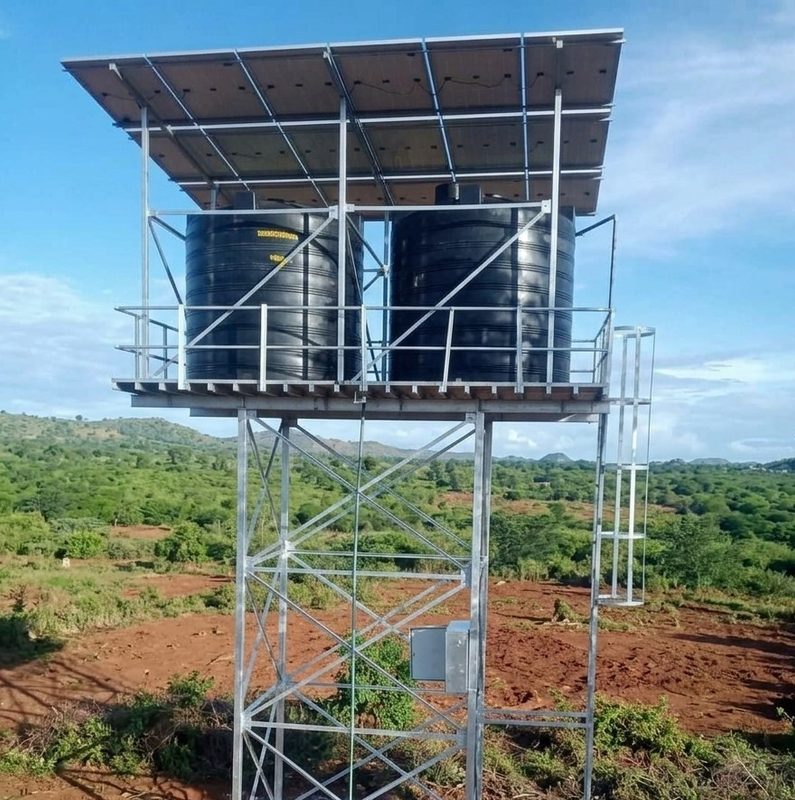
Elevating a tank uses gravity to deliver water pressure without a constant pump run. A fabricated steel tower or stand, designed for the full weight of the filled tank (water weighs 1 kg per litre, so a 10,000-litre tank puts about 10 tonnes on its supports), is a structural job. The stand should be engineered, not improvised.
Key Benefits of Steel Water Tanks
Durability. Steel handles rough handling, weather extremes and heavy loads. A well-made tank is a long-term asset rather than a consumable.
Water quality protection. Opaque steel walls keep sunlight out, which limits algae growth. With a food-grade lining or stainless construction, water stays clean and taste remains neutral.
Security. Steel tanks are difficult to tamper with or puncture, which matters for estates, schools and industrial compounds.
Flexibility in design. Tanks can be built as cylinders or rectangles, low and wide or tall and narrow, with fittings positioned exactly where your plumbing requires.
Fire safety. Steel is non-combustible, so it is the standard material for dedicated fire water reserves.
Repairability and lifecycle value. Damaged coatings can be restored and welds can be repaired. At the end of its life, steel is fully recyclable.
Applications of Steel Water Tanks
- Residential: homes, apartments and gated communities needing reliable backup supply
- Agriculture: irrigation reserves, livestock watering, dairy and greenhouse operations
- Industrial and manufacturing: process water, cooling systems and wash-down supply
- Commercial: hotels, hospitals, shopping centres and offices
- Education and institutions: boarding schools, colleges and churches with high daily demand
- Construction: temporary or semi-permanent site water storage
- Rainwater harvesting: collecting roof runoff during the rains for use in dry months
- Fire suppression: dedicated reserves connected to hydrant or sprinkler systems
How to Choose the Right Steel Water Tank
Step 1: Calculate your water demand
A common planning figure for domestic use is about 50 to 150 litres per person per day, depending on lifestyle and fixtures. For a household of six using roughly 100 litres each per day, daily demand is about 600 litres. To cover several days of supply interruption, you might store three to five days’ worth, meaning roughly 2,000 to 3,000 litres. Farms, schools and factories should calculate from actual metered or estimated consumption.
Step 2: Decide your backup period
How long can you go without mains or borehole supply? If water cuts last a few days, size for that. If you depend on seasonal rain, size for the dry season.
Step 3: Match the tank type to the water use
Choose stainless or food-grade lined steel for drinking water. Galvanized or coated steel can serve irrigation, industrial and general-purpose storage.
Step 4: Plan the location and foundation
Tanks need a level, properly prepared base. Ground tanks need a compacted, stable foundation, often a concrete slab. Elevated tanks need footings designed for the combined weight of the tank, water and stand.
Step 5: Think about water source and pressure
Will the tank be filled from mains, a borehole, a river or roof runoff? Do you need gravity pressure, or will you use a booster pump? This decides tank height, stand design and fittings.
Step 6: Specify the fittings
Good Steel Water Tanks tanks include properly sized inlet, outlet and overflow pipes, a drain or washout point, a lockable access hatch, a vented cover to keep out insects and contaminants, and a level indicator.
What Makes a Steel Tank Well Built?
Not all fabricated tanks are equal. When comparing suppliers, look for:
- Appropriate steel grade and plate thickness for the tank’s size and height, since pressure at the base of a tank rises with water depth
- Quality welding with full-penetration, leak-free seams, carried out by skilled welders
- Proper surface preparation such as cleaning and blasting before any coating is applied, because coatings fail quickly on poorly prepared steel
- Food-safe linings suitable for potable water where required
- Structural design of stands that accounts for wind, weight and stability
- Pressure or leak testing before delivery
- Warranty and after-sales support
Corrosion Protection: The Key to a Long Tank Life
Steel’s main enemy is corrosion, and most premature tank failures trace back to poor protection rather than the steel itself. Good protection systems include:
- Galvanizing: a zinc layer, either hot-dip applied or factory coated, protecting the metal surface
- Epoxy linings: a hard, chemical-resistant interior barrier that separates water from steel
- Primer and topcoat systems: exterior coatings that shield against rain, humidity and sun
- Stainless construction: eliminating the need for coatings in demanding applications
Maintenance Tips for Steel Water Tanks
Regular care keeps a steel tank performing for decades.
- Inspect the exterior every few months for scratches, peeling paint, rust spots or weeping seams
- Touch up damaged coatings early, since small rust spots spread quickly if ignored
- Clean the inside at least once a year, or more often if the water carries sediment, to remove sludge from the base
- Disinfect after cleaning with an appropriate chlorine solution, then flush thoroughly before refilling
- Check the hatch, vent and overflow to keep out insects, rodents and debris
- Check the stand and foundation for cracks, settlement, loose bolts or corrosion at the base plates
- Keep vegetation and debris away from the tank base to avoid trapped moisture
- Use first-flush diverters on rainwater systems to keep roof dirt out of the tank
Steel Water Tank Costs: What Affects the Price?
Prices vary widely, and any fair quote will reflect these factors:
- Tank capacity and dimensions
- Steel type and plate thickness (galvanized, mild steel or stainless)
- Lining and coating specification
- Fittings and accessories
- Stand height and structural requirements
- Transport distance and site access
- On-site assembly, foundation work and plumbing connections
Frequently Asked Questions
How long do steel water tanks last?
With good fabrication, suitable protection and regular maintenance, steel tanks can serve for several decades. Stainless steel tanks and well-lined tanks typically give the longest service.
Are steel water tanks safe for drinking water?
Yes, provided the tank is built from stainless steel or lined with a food-grade, potable-water-safe coating, and is cleaned and disinfected regularly. Bare mild steel should not be used for drinking water.
Do steel tanks make water hot?
Steel can absorb heat in direct sunlight, but shading, insulation or reflective coatings reduce this. Ground-level or partly shaded installations also help keep water cooler.
Can steel water tanks be used for rainwater harvesting?
Absolutely. Connect your gutters through a filter or first-flush device, size the tank to your roof area and local rainfall, and include a proper overflow.
What size steel water tank do I need?
Estimate daily consumption, multiply by the number of days of backup you want, and add a margin for growth. A fabricator can refine this based on your roof area, borehole yield or mains supply pattern.
Can a steel tank be repaired if it leaks?
Yes. Unlike many alternatives, steel can be welded, patched, re-lined and recoated, which extends its life significantly.
Can tanks be custom made to fit small or awkward spaces?
Yes. Fabricated tanks can be built tall and narrow, low and wide, or rectangular to fit roofs, basements, yards and tight compounds.
Why Choose Afritec Steel Fabricators for Your Water Tank?
At Afritec Steel Fabricators, we design and build steel water tanks and tank stands to suit your property, your water source and your budget. Every tank is fabricated with attention to structural integrity, weld quality and long-term corrosion protection.
What you can expect from us:
- Custom-fabricated steel tanks in the capacity and shape you need
- Elevated stands engineered for safe, stable support
- Material options to suit drinking water, irrigation, industrial and fire storage needs
- Clear quotations with transparent specifications
- Professional delivery and installation
- Support and advice after handover
Get a Quote for Your Steel Water Tank
Whether you are planning a home backup system, a farm irrigation reserve, or a large industrial installation, our team can help you select the right size, material and design.
Contact Afritec Steel Fabricators today for a free consultation and quotation.


